Choosing auto parts in 2026 is less about finding the lowest price and more about matching a part to the vehicle, its use, and its safety needs. S&P Global Mobility reported that the average age of U.S. light vehicles reached 12.6 years in 2024. Older vehicles often need more replacement components, but a familiar-looking part may still differ in fit, materials, or performance. Small details matter. A brake pad’s specifications, a sensor’s connector, or a filter’s dimensions can affect how a repair works.
That is why auto parts quality matters. A dependable choice should have clear vehicle-fitment information, traceable manufacturing details, and a warranty with understandable terms. For safety-critical parts, buyers should check applicable standards and follow the vehicle maker’s service guidance. The National Highway Traffic Safety Administration also warns consumers about counterfeit air bags, illustrating how poor-quality components can create serious risks. Not every aftermarket part is inferior, and a higher price alone does not prove quality. That distinction is easy to miss.
In this guide, we’ll look at practical ways to compare OEM and aftermarket options, verify compatibility, assess seller credibility, and spot warning signs such as vague listings or missing documentation. Use the VIN and the vehicle’s service records where possible; a quick visual match is not enough. Even careful buyers can overlook something. The aim is not to promise a perfect purchase, but to make a better-informed one—using evidence, not packaging or guesswork.
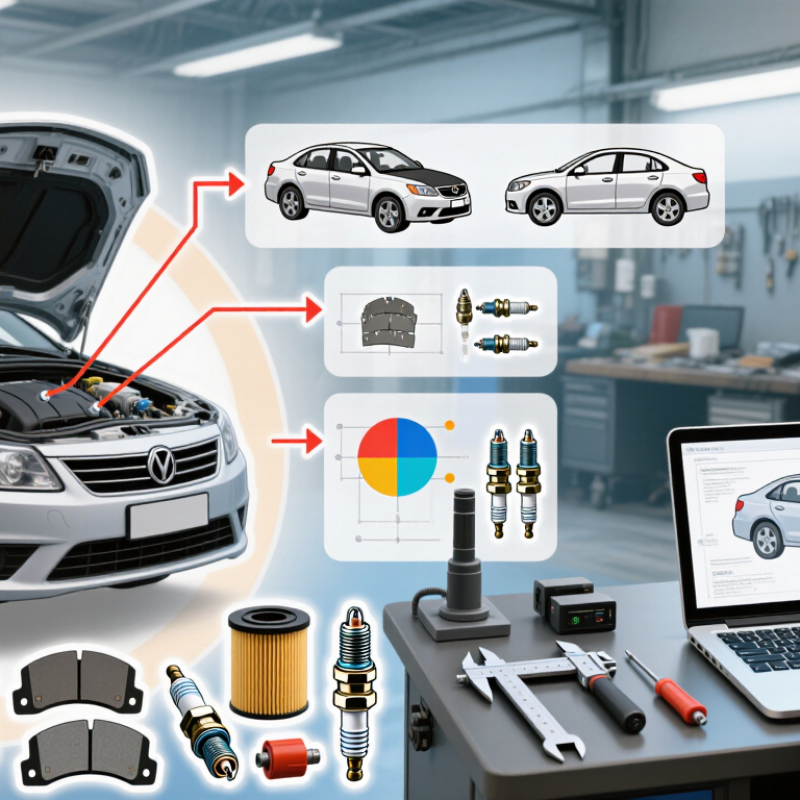
How to Choose Quality Auto Parts in 2026?
S&P Global reported that the average age of U.S. vehicles reached 12.6 years in 2024. Older vehicles often need more repairs, but age alone cannot identify the right replacement part. Match parts by VIN, which can help narrow down the vehicle’s year, engine, and factory configuration. Then confirm the part number with a qualified parts specialist or repair professional. A connector may look correct and still differ in fit or function.
Tips: Keep the VIN handy, and compare it with the vehicle’s registration or windshield plate. Check the part’s listed specifications, included hardware, warranty, and return terms. Ask whether fitment depends on the engine, trim, or production date. This step can feel fussy. It is.
Quality also means more than a clean finish or a low price. Look for clear material and performance specifications, consistent labeling, and instructions that match the job. For safety-critical components, ask a trained technician to verify compatibility and installation requirements. Keep the receipt and packaging until the repair is complete. A small mismatch can mean lost time, another repair visit, or a part that does not work as intended. I’d still double-check, even when the listing seems obvious.
| Data Point | What to Check | Practical Selection Rule | Source or Basis |
|---|---|---|---|
| Average age of U.S. light vehicles | 12.6 years in 2024 | For an older vehicle, confirm exact application and inspect related wear items before ordering a replacement part. | S&P Global Mobility, 2024 vehicle-age estimate |
| Vehicle identification number (VIN) | 17 characters for standardized VINs on vehicles built from the 1981 model year onward | Enter the complete VIN when checking fitment; do not rely on a partial VIN or a general model description alone. | National Highway Traffic Safety Administration (NHTSA) VIN guidance |
| VIN model-year position | Character 10 identifies the model year in a standard VIN | Confirm the decoded model year against the vehicle documents and the part catalog before purchase. | NHTSA VIN guidance |
| VIN check digit | Character 9 is the check digit for VINs used in the United States | Recheck the VIN entry if a decoder reports an error or returns an unexpected vehicle configuration. | NHTSA VIN guidance |
| Vehicle configuration | Engine, fuel type, transmission, drivetrain, body style, trim, and production date where relevant | Make sure every configuration field shown in the parts listing matches the vehicle; two vehicles with the same model name may use different parts. | Fitment verification practice; confirm with a vehicle-specific parts catalog |
| Part number and supersession | Exact reference number, including letters, suffixes, and any listed replacement number | Cross-check the complete number and verify that any superseding number is explicitly listed for the vehicle. | Parts-catalog cross-reference practice |
| Physical fit | Mounting points, dimensions, connector shape, pin count, hose ports, and left- or right-side position | Compare specifications or the removed part with the listing, especially when the catalog shows multiple variants. | Component-specific fitment check |
| Quality and traceability | Material and specification details, manufacturing traceability, applicable test information, and written warranty terms | Prefer listings that provide verifiable specifications and clear warranty conditions; avoid relying on vague claims such as “premium quality.” | General purchasing due diligence |
| Final fitment confirmation | VIN lookup plus a second check of the vehicle configuration and part reference | Use VIN decoding as a starting point, not a guarantee: confirm the exact application in a parts catalog or with a qualified parts professional. | NHTSA vPIC provides VIN decoding based on manufacturer-submitted data; application fitment should be separately confirmed |
Note: A VIN helps identify vehicle configuration, but it does not by itself confirm that every catalog listing fits. Verify the application and part reference before purchase.
The U.S. auto care market reached $391 billion in 2023. Its size does not guarantee equal quality.
OEM parts follow the vehicle maker’s original specifications. OES parts come from suppliers serving original production. Independent manufacturers make aftermarket parts, whose fit and quality can vary.
Match the vehicle year, model, engine, and exact part number. Check listed compatibility carefully. Small mismatches can waste labor.
Check vehicle fitment, surface finish, mounting points, and included hardware. Ask whether the warranty covers labor or only the part.
No. IATF 16949 indicates a supplier’s quality-management system meets an industry standard. It does not guarantee every part is suitable or defect-free.
Ask which requirements apply to the specific component. Request supporting documents, since requirements vary by part. A claim alone is not proof.
Search using the exact part number and manufacturer details. Confirm whether the notice affects your vehicle or component. Use the VIN when an official recall tool allows it.
Keep the receipt and packaging. They help identify the part later. Check the return window before opening the package.
Not necessarily. Consider the cost of another repair if the part fails early. That estimate is imperfect, and I could still miss something.
Choosing quality auto parts in 2026 starts with matching the part to your vehicle’s VIN, especially as the average age of vehicles on U.S. roads reaches 12.6 years. In a $391 billion U.S. market, buyers can compare OEM, OES, and aftermarket options, weighing fit, function, availability, and price. The key to understanding why auto parts quality matters is recognizing that a suitable part can support reliable performance and help avoid unnecessary replacement costs.
Before buying a critical component, check for relevant IATF 16949 quality certification, applicable FMVSS compliance, and any recall information. Compare warranty terms, product traceability, and total cost—not just the initial price. Confirm that the part’s installation specifications match your vehicle and keep receipts and service records. These steps make it easier to assess a part’s suitability now and support future maintenance decisions.

 Yihe Auto