Automotive components travel far beyond vehicle assembly lines. A wheel bearing, pressure sensor, wiring harness, or battery-management unit can support equipment in several sectors. In its 2023 production statistics, the International Organization of Motor Vehicle Manufacturers (OICA) recorded approximately 93.5 million vehicles produced worldwide. That scale sustains a broad network of component makers and suppliers. The market is also changing. The International Energy Agency’s Global EV Outlook 2025 reports that electric-car sales exceeded 17 million in 2024, representing more than one-fifth of global car sales. More electric vehicles mean growing demand for power electronics, thermal controls, connectors, and precision housings.
So, what industries rely on automotive components in 2026? Beyond passenger vehicles, commercial transport, construction, agriculture, mining, energy, and industrial automation use related parts and technologies. Fleet operators need durable braking and steering systems. Farm machinery relies on sensors and hydraulic components. Industrial facilities use motors, bearings, and control units designed for demanding operation. The overlap is real, but it is not universal. A component developed for a car may not withstand a different machine’s vibration, workload, or maintenance conditions. That distinction matters. Public reports track vehicle production and electrification more consistently than component reuse across industries, so precise cross-sector totals remain difficult to establish. This overview examines where automotive components are used, why those industries depend on them, and how evolving technology may reshape demand. The boundaries can be messy. That deserves a closer look.
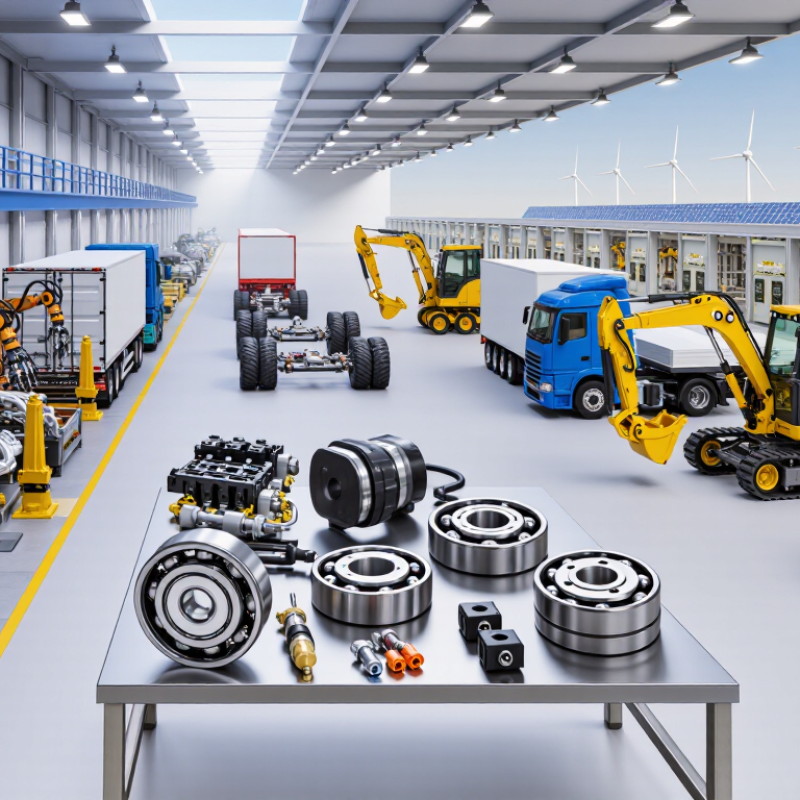
OICA recorded 93.5 million vehicles built worldwide in 2023. That scale helps explain why automotive components matter beyond vehicle assembly. Each vehicle needs parts such as wiring, bearings, sensors, fasteners, and molded interior pieces. Their production supports metalworking, electronics, plastics, and rubber industries. Warehouses and freight operators also move these components between suppliers and assembly plants.
The figure is a useful signal, not a complete map. It counts vehicles produced, not the volume or origin of every component. Nor does it predict output in 2026. Still, large production runs create steady demand for parts that meet precise dimensions and arrive on schedule. A delayed connector or bearing can slow an entire line.
Small parts matter.
Automotive components also serve repair networks and equipment makers that use vehicle-derived systems. In 2026, demand will depend on production plans, vehicle designs, and replacement needs. These can vary by region and component type. One weakness in broad industry estimates is that they can make supply chains look simpler than they are. A single vehicle may involve many suppliers, and public production totals rarely show where bottlenecks begin.
As the average age of U.S. vehicles reached 12.6 years in 2024, repair and aftermarket businesses faced steady demand for replacement components. Older vehicles often need attention to brakes, suspension parts, belts, filters, and cooling systems. A worn bushing may show up as a clunk over a pothole. A cracked hose can cause a small leak to become a roadside problem. These practical repairs help keep existing vehicles usable for longer.
The average does not mean every vehicle is 12.6 years old. Driving conditions, mileage, maintenance history, and climate all affect component wear. A high-mileage vehicle used for daily commuting may need repairs sooner than a lightly driven vehicle of the same age. Shops and parts suppliers can use age trends as a planning signal, not as a substitute for inspection. That distinction matters, and it is easy to overlook.
Tips: Check service records before replacing parts. Inspect related components during repairs, especially hoses, mounts, and seals. Confirm fitment using the vehicle’s year, model, and engine details. When a symptom is unclear, diagnose before ordering. A little extra checking can prevent a second repair visit.
| Industry | Automotive components commonly used | Typical aftermarket need | Relevance of an aging vehicle fleet |
|---|---|---|---|
| Vehicle repair and maintenance shops | Brake components, filters, batteries, suspension parts, belts, hoses, and engine or drivetrain components | Inspection, maintenance, diagnosis, and replacement of worn or failed parts | Older vehicles may require more age- and wear-related maintenance, supporting ongoing demand for replacement components. |
| Collision repair | Body panels, bumpers, lamps, glass, mirrors, sensors, and structural repair components | Replacement and repair after collisions, including restoration of vehicle safety systems | Vehicles of many ages need collision repairs; parts availability and repair feasibility can affect whether an older vehicle is repaired. |
| Tire and wheel services | Tires, wheels, valves, wheel bearings, and tire-pressure monitoring components | Tire replacement, puncture repair, balancing, alignment, and related component service | Tires are wear items, so replacement needs arise across vehicle ages and are not limited to newer vehicles. |
| Commercial and public fleet maintenance | Brakes, tires, batteries, lighting, suspension, cooling, and powertrain components | Scheduled servicing and repairs intended to keep vehicles safe and available for work | Fleet operators depend on replacement parts to maintain vehicles in service and manage repair downtime. |
| Vehicle recycling and dismantling | Reusable engines, transmissions, body parts, wheels, electrical components, and materials | Recovery, inspection, resale, and recycling of usable parts and vehicle materials | End-of-life vehicles can supply used components for repair markets, subject to condition and compatibility. |
| Parts remanufacturing and rebuilding | Alternators, starters, engines, transmissions, steering components, and brake assemblies | Restoration of eligible used components to serviceable condition for reuse | Repair and replacement needs can support demand for rebuilt components, where a suitable core and repair path are available. |
2024 vehicle-age reference: The average age of vehicles in operation in the United States reached 12.6 years in 2024, according to S&P Global Mobility. Industry rows describe common component applications and service activities; they are not market-size estimates.
Freight and logistics depend on automotive components every mile. In 2022, trucks carried 72.7% of U.S. freight by weight, according to the figure cited in this article’s subtitle. That share shows why reliable commercial vehicles matter across supply chains. Engines, transmissions, tires, brakes, steering systems, and suspension parts all help trucks move heavy loads between ports, warehouses, farms, factories, and stores.
A worn brake component can delay a delivery and create a serious safety risk. A failed tire may leave a loaded vehicle waiting beside a route, while a faulty cooling system can disrupt a long haul. Fleet maintenance teams inspect these parts, track wear, and plan replacements to reduce avoidable downtime. Small parts matter. So does fit. Vehicle specifications and operating conditions vary, so a component that works well in one truck may not suit another. The 72.7% figure describes freight by weight in 2022; it should not be treated as a current-year forecast. That distinction is easy to overlook, and freight patterns can change. In 2026, logistics companies still rely on durable components, careful maintenance, and realistic planning to keep goods moving.
In 2024, global electric-car sales exceeded 17 million, representing more than 20% of new car sales, according to the International Energy Agency’s Global EV Outlook 2025. Demand is shifting. This growth connects automotive manufacturing with battery production, power electronics, copper and aluminum processing, thermal management, and freight logistics. Components such as inverters, high-voltage connectors, battery housings, and cooling plates are becoming increasingly important across these industries.
Tips: Suppliers should check voltage requirements, heat loads, material availability, and quality records before expanding production. Map dependencies beyond direct suppliers; a shortage of a small connector or cooling component can delay larger assemblies. Keep forecasts flexible, too. EV demand varies by region, and sales growth does not guarantee steady orders for every component.
The IEA’s reported figure includes battery-electric and plug-in hybrid cars, so it is not a measure of fully electric vehicles alone. That distinction matters when estimating demand for charging-related parts or battery capacity. Component makers can use the sales trend as a planning signal, not a promise. A less comfortable point: supply-chain data can be incomplete, especially several tiers upstream, so forecasts may look more precise than they really are.
Electric-Vehicle Supply Chains: EVs Exceeded 20% of Global Car Sales in 2024
Electric cars accounted for more than one-fifth of global car sales in 2024. This expanding supply chain relies on components and materials from industries including battery manufacturing, electronics, metals, chemicals, glass, and tire production.
Source: International Energy Agency (IEA), Global EV Outlook 2025. Annual shares are approximate; 2024 is shown as 21% to represent the reported figure of more than 20%.
About 93.5 million vehicles were built worldwide. This shows strong demand for many automotive components.
Common examples include wiring, bearings, sensors, fasteners, and molded interior parts. Small parts matter.
No. It counts completed vehicles, not every part’s origin or quantity. Supply chains remain partly hidden.
A missing connector or bearing may stop a larger assembly. One tiny gap can affect an entire line.
Electric-car sales exceeded 17 million, passing 20% of new car sales. Demand is shifting.
Important examples include inverters, high-voltage connectors, battery housings, and cooling plates.
They should review voltage needs, heat loads, material access, and quality records. Do not trust growth alone.
A shortage several tiers upstream can interrupt production. The weakest link may be far away.
No. Demand differs by region, vehicle design, and component type. Forecasts can look more certain than reality.
Public figures often hide bottlenecks, replacement demand, and upstream shortages. Some uncertainty remains.
What industries rely on automotive components? The answer extends well beyond vehicle assembly. Automotive manufacturing depends on a steady supply of parts to build the large number of vehicles produced worldwide; OICA recorded 93.5 million vehicles built in 2023. Repair shops and the aftermarket also rely on replacement components, especially as vehicles remain in service for longer. In the United States, the average vehicle age reached 12.6 years in 2024, supporting ongoing demand for maintenance and repairs.
Freight and logistics are another major area of reliance, since trucks carried 72.7% of U.S. freight by weight in 2022 and require components to keep vehicles operating. Electric-vehicle supply chains also depend on automotive parts and systems as adoption grows: EVs exceeded 20% of global car sales in 2024. Together, these industries show how automotive components support vehicle production, long-term upkeep, goods movement, and the transition toward electric mobility.

Yihe Auto